
A Sunset Photo Walk Plan for One Hour: From Scouting to Editing
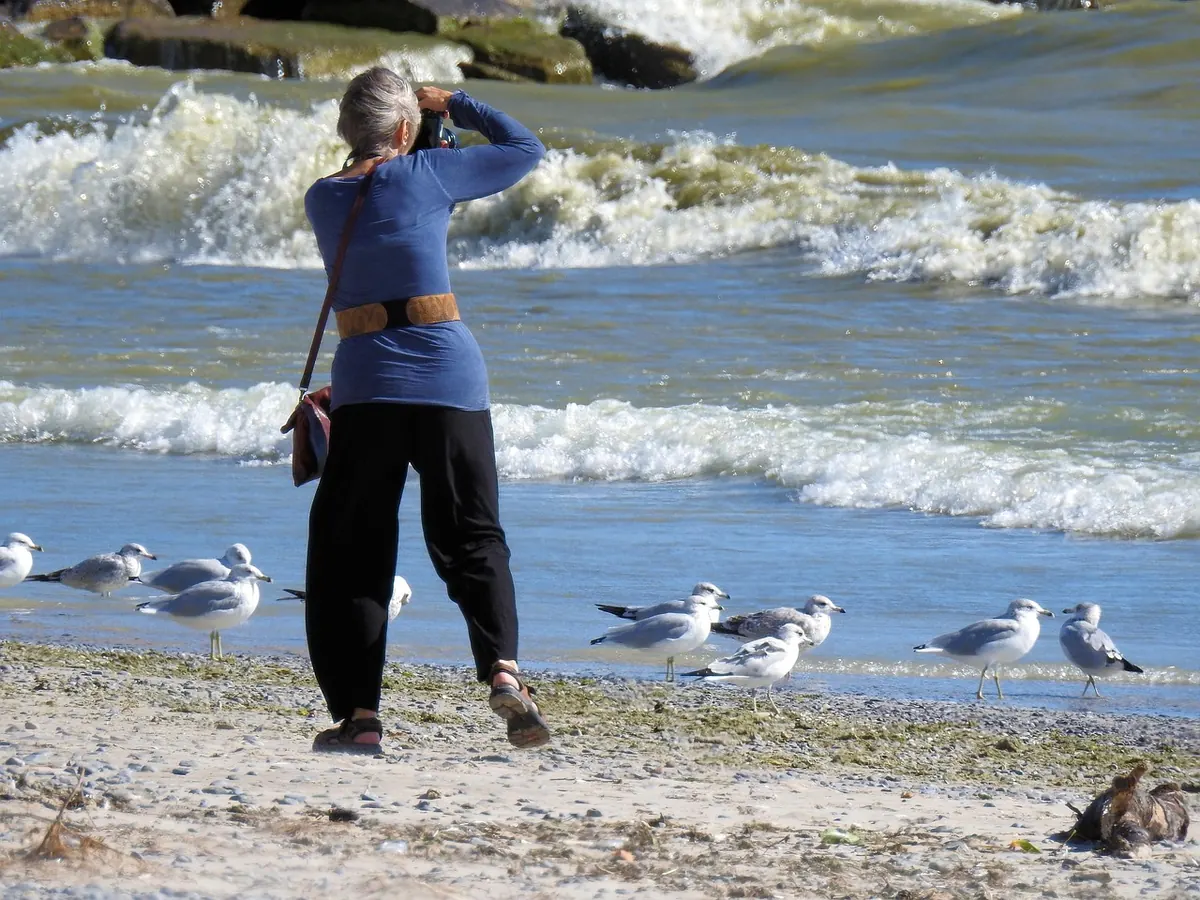
An hour is enough. Not enough to drive to a famous viewpoint, fight for a tripod spot and come home with two hundred near-identical frames — but plenty of time to walk out of your own neighbourhood, read the light, make a dozen deliberate pictures and end up with a series that holds together. The trick is to treat the hour as a structure rather than a countdown: a few minutes of preparation before you leave, a slow lap of the location, then a sequence of decisions tied to where the sun actually is. What follows is a workable plan for exactly that, from the first map check to the last adjustment in the editor.
Before You Go: Five Minutes of Scouting
Most disappointing sunsets are decided before anyone leaves the house. Check the sunset time for your position, then check the direction — the sun rarely sets due west, and the difference of twenty or thirty degrees can put a building right where you wanted open sky. A sun-tracking app or a simple compass will tell you both. Look at a map for west-facing streets, a stretch of water, a ridgeline, a bridge, anything that gives you a horizon you can actually see.
Choose one main location and one backup within a ten-minute walk of each other. Having a second option means a bank of cloud rolling in doesn't end the evening.
Pack light and deliberately: one camera, one wide lens and one short telephoto, a spare battery, a microfibre cloth, and a small tripod only if you know you'll use it. A pocketable light meter or your phone's torch is useful for finding your way back. Wear shoes you can stand in for an hour.
The First Fifteen Minutes: Walk It Without Shooting
Arrive around fifty to sixty minutes before sunset and resist the urge to raise the camera. Walk the perimeter of the spot instead. You are looking for three things: a foreground anchor that gives the frame depth, a clean horizon line that isn't interrupted by a lamp post growing out of your subject's head, and a place to stand where you're not blocking a path or standing in somebody's garden.
Notice where the shadows are falling and how quickly they're moving. Watch how other people use the space — dog walkers, joggers, couples on a bench — because they will wander into your frame whether you plan for it or not. Frame a few compositions with your hands, then pick two or three and commit them to memory. Mark a spot by a distinctive stone or a kerb, so you can return to it in the dark.
This lap also does something less technical: it slows you down. The first photograph of an evening is usually the worst one, and it's better to get it out of the way mentally than to spend the best light on it.
The Light, Stage by Stage
Forty minutes out: warm but still directional
The light is golden and still has shape to it. This is your window for anything with texture — brick, grass, water, faces — because the sun is low enough to reveal surface rather than flatten it. Expose for the highlights and let the shadows go where they want.
The last ten minutes: backlight and silhouettes
As the sun approaches the horizon, contrast climbs fast. Stop trying to hold detail in both the sky and the ground; choose. Underexpose by a stop or so and let trees, railings and people become shapes. Meter for the brightest part of the sky you want to keep, then check the histogram once and trust it.
After the sun drops: the afterglow is the payoff
Many photographers pack up the moment the disc disappears. Don't. The ten to twenty minutes afterwards often produce the richest colour of the whole evening — pinks and mauves that never appear at sunset itself. Colour becomes softer and more even, which suits wide scenes and reflections. Keep shooting until the colour is genuinely gone, not just until the sun is out of sight.
A Shot List That Fits the Hour
Working to a loose list keeps you from shooting the same frame twelve times. Adjust the order to your location, but aim to cover all of these:
- One wide establishing frame that says where you are, made early while you still have detail in the land.
- A foreground detail — a fence post, a puddle, a curve of dry grass — shot low and close with the sky behind it.
- A silhouette with a clear, simple outline and a bit of space around it.
- A reflection in water, glass or a wet pavement, which doubles the colour for free.
- One compressed frame on the telephoto: the sun huge behind a roofline or a row of trees.
- One human element, small in the frame, to give scale and a hint of story.
- One quiet frame with almost nothing in it — just sky, gradient and a single line.
That's seven pictures. If you get them, the walk has worked, and anything else is a bonus.
Edit the Same Evening, While It's Still Fresh
Import everything, then cull hard: twelve to fifteen frames is a generous series, eight is a strong one. Delete the near-duplicates immediately — the ones where you moved half a step and gained nothing. You won't miss them.
Next, put the keepers in a row and look for a sequence rather than a collection. A series usually wants an opening wide, a couple of variations in the middle and something quieter to close. If two pictures say the same thing, one of them is redundant.
Then edit for consistency, not for maximum impact on each individual frame. Set white balance once and apply it across the set. Bring highlights down gently, lift the shadows slightly, and add a touch of contrast. Resist pushing saturation: sunsets are already the loudest thing in your library, and over-edited colour flattens the difference between a good frame and a great one. Save one version you consider finished and stop there.
Make the Hour a Weekly Habit
The value of this plan isn't any single sunset — it's the repetition. Choose one evening a week, pick a location you can reach on foot, and run the same structure: check the sun, walk the ground, work the list, stay for the afterglow, edit before bed. After a month you'll have four small series and a much better sense of how light behaves in your own neighbourhood, which is knowledge no workshop can hand you. Take the same route twice and you'll start seeing things you walked past the first time.
Photo: 3444753 / Pixabay